

What is systemic metabolic disorder, and what causes it?
Global obesity rates have doubled since 1990, and over one billion people now live with obesity. Excess body fat, especially around the organs (visceral fat), causes widespread metabolic disturbances that increase the risk of heart, liver, and kidney disease and shorten life expectancy.
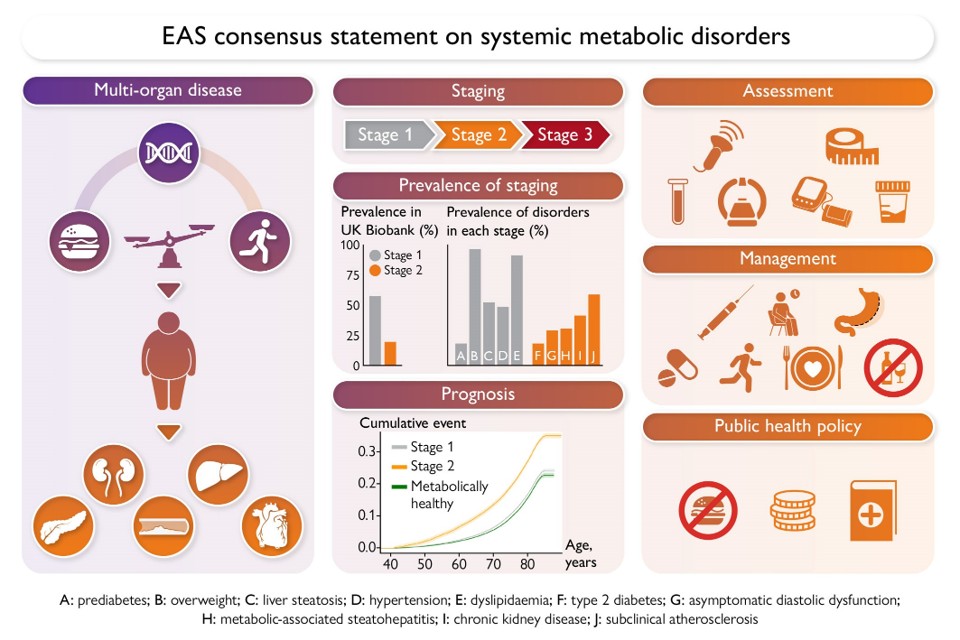
Many of these metabolic abnormalities are interconnected and progress together, yet they have often been treated separately. The European Atherosclerosis Society has therefore developed a new, clinically practical staging system for systemic metabolic disorders (SMDs) — a cluster of obesity-related metabolic disturbances that affect multiple organs. The system aims to help clinicians recognize stages of disease and take early, targeted action.
SMD develops when the body’s ability to store fat safely is exceeded, leading to harmful fat deposits in organs like the liver, muscles, and heart. This triggers inflammation and fibrosis that vary between individuals depending on genetic and environmental factors. Visceral obesity in particular promotes insulin resistance, fatty liver disease, inflammation, and atherosclerosis, making it a key driver of SMD and its complications.
Genetics
Genetic factors play a major role in obesity and related metabolic disorders, with heritability estimated at 40–70%. While rare mutations cause severe single-gene forms, most people’s risk comes from many common genetic variants with small effects. Large genetic studies show that different components of systemic metabolic disorder (SMD) share some genetic causes but also have distinct ones.
Genetic research also confirms that visceral fat (around the organs) is a key driver of metabolic disease, while gluteofemoral fat (around hips and thighs) is linked to healthier metabolism. Lifestyle factors such as diet and physical activity can worsen or offset these inherited risks.
Ethnicity
The risk and impact of systemic metabolic disorders (SMD) differ across ethnic groups due to both social and genetic factors. For example, Asian populations often develop metabolic problems at lower BMI levels because of more abdominal fat; South Asians have a higher risk of heart disease; African Americans are less likely to develop fatty liver despite high obesity rates; and in Latin America, rising obesity and diabetes—driven by urbanization, ageing, and inequality—are increasing metabolic disease risk.