


Patient management and follow-up
Effective communication and dissemination of information to patients with inherited hyperlipidaemias and other lipid disorders are important, as early and lifelong management is needed to prevent adverse outcomes. Providing accurate, tailored information helps patients understand their condition and improves adherence to lifestyle changes and treatment.
Patient information leaflets should be available in all lipid clinics, particularly for FH and high lipoprotein(a), as these conditions are underdiagnosed and undertreated worldwide9, 40. Information for first-degree relatives is also important when cascade screening is recommended.
Patient materials (leaflets and webpages) should preferably be developed at national or regional level to ensure standardization and quality. Messages should be simple and adapted to the target population, and may also include smoking cessation and healthy dietary habits.
How can patient education be improved?
Lipid clinics can collaborate with patient organizations and national initiatives to:
- Develop clear and relevant materials that help patients understand their condition and treatment
- Training of referent patients: individuals with severe disease acting as coaches for newly diagnosed patients and their families (e.g. patients with homozygous FH)
- Arrange workshops or support groups where patients can ask questions and share experiences with others in similar situations
- Help in raising awareness of lipid-related diseases among the public through national campaigns and information initiatives
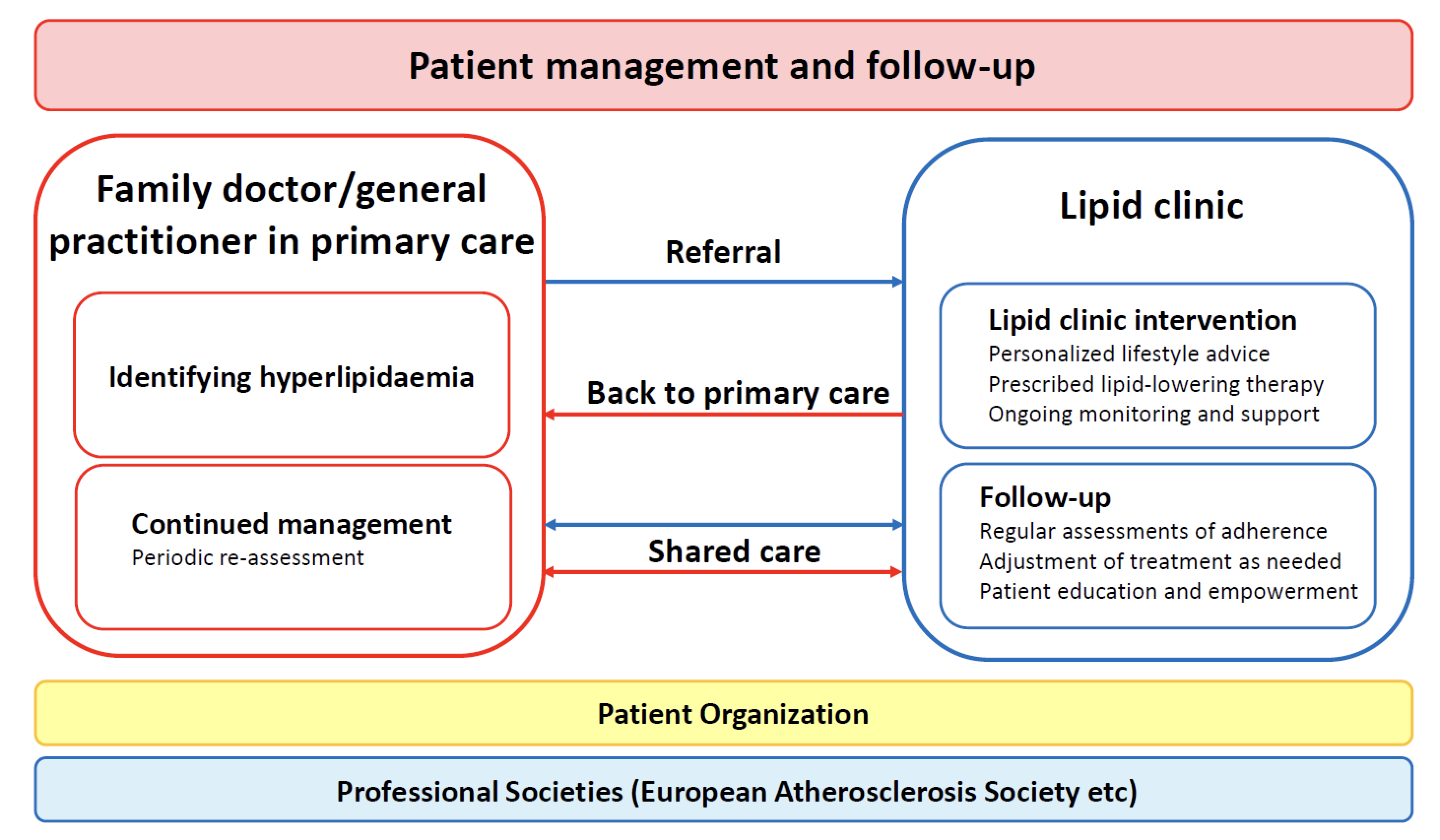
Key to lipid management and thus prevention of ASCVD, acute pancreatitis and other lipid-related diseases is patient adherence to optimal lifestyle and prescribed lipid-lowering therapy. Here lipid clinics are centrally placed and in consequence need to follow patients for a period to secure that patients follow the advice given to them (Figure 9). Only once this has been ensured, can patients be safely referred back to their general practitioner/family doctor.
Which patients should be followed in lipid clinics?
| Familial hypercholesterolemia | Patients with FH should be followed in lipid clinics in partnership with general practitioners/family doctors and specialists in lipidology due to the lifelong condition, including management in childhood, adolescence, pregnancy, adulthood or older age. This condition also includes cascade screening of biological family members and appropriate treatment of affected family members. As medical treatments continue to advance, lipid clinics are uniquely positioned to stay at the forefront of new evidence and clinical guidelines, offering individualized, state-of-the-art treatment tailored to each patient’s specific needs. |
| Extremely elevated lipoprotein(a) | Patients with extremely elevated lipoprotein(a) of ≥ 400 nmol/L (≈180 mg/dL) should also be followed in lipid clinics due to cascade screening of family members and estimated risk of developing early ASCVD comparable to heterozygous FH10. |
| Persistent severe hypertriglyceridemia | Patients with persistent triglyceride levels >10 mmol/L (880 mg/dL) after exclusion of causes of secondary hyperlipidaemia should be referred to lipid clinics to mitigate the high risk of both acute pancreatitis and ASCVD, via lifestyle modifications and medical treatment. The duration of follow-up in the lipid clinic depends on the complexity of treatment and genetic results. |
| Insufficient LDL cholesterol reduction | Patients who do not achieve LDL cholesterol, non-HDL cholesterol, and/or apoB goals despite maximally tolerated lipid-lowering therapy should be referred to lipid clinics. Here, treatment like PCSK9 inhibitors may be initiated when patients meet the criteria according to national guidelines and reimbursement criteria. |
| Statin intolerance | Patients who demonstrate intolerance to multiple statins – or other first-line lipid-lowering agents – should be referred for advanced monitoring and management. Importantly, however, true statin intolerance is very rare69. Lipid clinic specialists can guide individualized strategies, including dose adjustment, trial of different statins, intermittent dosing, or non-statin alternatives. |
| Complex lipid profiles and hypolipidaemia | In case of diagnostic uncertainty, lipid clinics play a critical role in providing comprehensive diagnostic clarity and tailored therapeutic advice. |
Frequency of follow-up
The initial follow-up is typically scheduled within 1–3 months, followed by routine assessments every 6–12 months. During treatment optimisation, follow-up may be conducted via telephone, virtual consultations, or written correspondence. For genetic counselling, face-to-face meetings are recommended to ensure accurate information and to facilitate cascade screening in biological relatives.
Consultation duration varies depending on dietary and lifestyle needs, psychological and social factors, overall cardiovascular risk, and the presence of ASCVD, acute pancreatitis, or other comorbidities.
Shared care between the general practitioner/family doctor and the lipid clinic is appropriate for long-term management (Figure 9). For children up to 18 years, annual assessments are recommended, with careful transition from paediatric to adult care.
Availability of specialist lipid clinics varies across regions, so follow-up schedules must reflect both guidelines and local conditions. More frequent follow-up is needed in severe hypertriglyceridaemia, homozygous FH, severe heterozygous FH, pregnancy, and during treatment escalation.
The patient perspective
Effective management and follow-up in lipid clinics must be personalised, empathetic, and empowering70. Care should address not only clinical goals but also the lived experiences of patients with complex conditions such as FH70, 71.
Managing genetic testing and treatment in FH requires clear communication, access to reliable information, and a strong support structure70, 71. Patients often face unfamiliar terminology and decisions affecting both themselves and their families.
Support from trusted healthcare professionals, clear information, and contact with peers improve patient confidence and understanding70, 71. Collaboration between lipid clinics and patient organisations also helps ensure that patient perspectives are valued and decisions are shared73.
Patient-centred care is essential, especially for families requiring coordinated genetic testing. Barriers such as travel distance and cost can reduce adherence, making accessibility and flexible appointments important. Digital tools such as reminders, online booking, and telemedicine can improve follow-up and outcomes.
Finally, the success of follow-up depends not only on visit frequency but also on the quality of interactions and time available for patient concerns. Despite workforce and time limitations, patient engagement remains central to effective lipid management74-79.
Adherence to dietary advice
The term adherence may carry unintended negative connotations for some patients, suggesting surveillance or blame rather than collaboration. Recognising this can help shift the focus from adherence and compliance to shared decision-making and individualised support72.
Dietary modification remains a cornerstone of ASCVD prevention, but long-term change is difficult to maintain. Standardised leaflets are often insufficient; patients instead need practical, culturally sensitive guidance tailored to individual preferences, family context, age, and gender72, 75.
Access to trained dietitians is particularly important in inherited conditions such as FH and familial chylomicronaemia syndrome, where early and sustained lifestyle intervention is essential. Counselling should also explain dietary changes in relation to genetic risk and drug therapy.
Evidence suggests gender differences in dietary adherence, with women more likely to maintain changes and men reporting greater difficulty despite awareness of benefits. This highlights the need for tailored strategies based on gender, age, and daily routines80.
Effective dietary counselling must go beyond written materials. Integrating dietitians into lipid clinics (Figure 6) and providing ongoing, adaptive support can improve adherence and better align treatment with patients’ everyday lives.
Adherence to other lifestyle advice
Lifestyle modification is a key part of hyperlipidaemia management and includes a heart-healthy diet, physical activity, weight control, smoking cessation, and reduced alcohol intake3. Although guidelines are clear, translating them into long-term behaviour change remains difficult. Many patients experience guilt, shame, or discouragement when targets are not met, which can reduce self-efficacy and engagement with care.
These challenges are compounded by limited time, energy, and competing responsibilities. Caregivers, particularly mothers, may prioritise family needs, while fatigue, work demands, and socioeconomic factors further limit lifestyle change.
To address this, lipid clinics should integrate psychological and behavioural support into care pathways11, 81 where possible (Figure 6). Counselling should be empathetic and non-judgemental, framing setbacks as learning opportunities. Practical, incremental changes such as healthier substitutions, short daily walks, or simple high-fibre meals can support sustainable change. Digital tools and group activities may further improve motivation.
Group-based approaches can reduce stigma and provide peer support, including family involvement and community programmes that are culturally adapted.
Lifestyle modification is not only biomedical but also behavioural and psychosocial 81. Combining evidence-based advice with personalised and peer-supported approaches can improve adherence and long-term cardiovascular outcomes.
Adherence or persistence to medication
Despite clear benefits of lipid-lowering therapy, adherence remains a major challenge. The SANTORINI study found that only 27% of high- and very high-risk patients achieved LDL cholesterol targets according to the 2019 ESC/EAS guidelines3, 81. Poor adherence affects individual outcomes and also creates public health and economic burdens81.
Factors contributing to non-adherence include perceived side effects, lack of immediate benefit, and limited understanding of cardiovascular risk73, 79. Treatment must also fit patient lifestyles; some prefer oral therapies over injectable PCSK9 inhibitors74, or vice versa.
Shared decision-making is essential to improve adherence by involving patients in treatment choices and respecting their preferences, particularly during transition from paediatric to adult care when adherence often declines. Addressing psychological factors, such as fear of side effects and the nocebo effect, through empathetic communication can further enhance adherence72, 73, 81.
Information on new therapies and clinical trials may further support motivation and engagement. Overall, improving adherence requires a multifaceted approach combining lifestyle alignment, patient involvement, psychological support, and education on future treatment options to optimise lipid management and reduce cardiovascular disease burden.
Understanding genetic test results
The genetic basis of FH and other inherited lipid disorders, as well as the benefits of genetic testing, may be difficult for patients to understand. Specialized lipid clinics should therefore allocate sufficient time to pre- and post-test genetic counselling, either within the clinic or in collaboration with genetic departments. Adequate time for discussion helps build trust and improves adherence. Supplementary printed, digital, or audiovisual materials, as well as patient organisations, can further support understanding and shared experience.
Patients should be informed about the genetic basis of disease, associated risks, and the possibility of testing relatives. With advanced genetic testing, correct interpretation is essential, including distinguishing pathogenic, benign, or uncertain variants and linking them to clinical phenotype. This requires close collaboration with diagnostic laboratories, possible involvement of clinical geneticists (Figure 6), and clear communication with patients. While genetic testing refines diagnosis and risk assessment, the clinical phenotype remains central, even when no pathogenic variant is identified.
Patients should also receive guidance on implications for offspring and family planning within a structured counselling process, including reproductive risks and support during decision-making, pregnancy, and prenatal planning.
These recommendations are based on expert opinion and experience from European clinical practice and patient organizations.
3. Mach F, Baigent C, Catapano AL, Koskinas KC, Casula M, Badimon L, et al. 2019 ESC/EAS Guidelines for the management of dyslipidaemias: lipid modification to reduce cardiovascular risk. Eur Heart J. 2020;41(1):111–88.
9. Kronenberg F, Mora S, Stroes ESG, Ference BA, Arsenault BJ, Berglund L, et al. Lipoprotein(a) in atherosclerotic cardiovascular disease and aortic stenosis: a European Atherosclerosis Society consensus statement. Eur Heart J. 2022;43(39):3925–46.
10. Hedegaard BS, Bork CS, Kaltoft M, Klausen IC, Schmidt EB, Kamstrup PR, et al. Equivalent Impact of Elevated Lipoprotein(a) and Familial Hypercholesterolemia in Patients With Atherosclerotic Cardiovascular Disease. J Am Coll Cardiol. 2022;80(21):1998–2010.
11. Mach F, Koskinas KC, Roeters van Lennep JE, Tokgozoglu L, Badimon L, Baigent C, et al. 2025 Focused Update of the 2019 ESC/EAS Guidelines for the management of dyslipidaemias. Eur Heart J. 2025;46(42):4359–78.
40. Nordestgaard BG, Chapman MJ, Humphries SE, Ginsberg HN, Masana L, Descamps OS, et al. Familial hypercholesterolaemia is underdiagnosed and undertreated in the general population: guidance for clinicians to prevent coronary heart disease: consensus statement of the European Atherosclerosis Society. Eur Heart J. 2013;34(45):3478–90a.
69. Howard JP, Wood FA, Finegold JA, Nowbar AN, Thompson DM, Arnold AD, et al. Side Effect Patterns in a Crossover Trial of Statin, Placebo, and No Treatment. J Am Coll Cardiol. 2021;78(12):1210–22.
70. Sarkies MN, Watts GF, Gidding SS, Santos RD, Hegele RA, Raal FJ, et al. Implementation strategies for improving the care of familial hypercholesterolaemia from the International Atherosclerosis Society: next steps in implementation science and practice. Am J Prev Cardiol. 2025;22:100993.
71. Bakour HA, Hussain Timraz J, Bin Saddiq BW, Alghamdi NA, Irfan Thalib H, Alyarimi M, et al. Familial Hypercholesterolemia: A Comprehensive Review of Advances in Treatment Strategies and the Role of Patient Beliefs. Cureus. 2025;17(1):e78032.
72. Baratta F, Angelico F, Del Ben M. Challenges in Improving Adherence to Diet and Drug Treatment in Hypercholesterolemia Patients. Int J Environ Res Public Health. 2023;20(10).
73. Lansberg P, Lee A, Lee ZV, Subramaniam K, Setia S. Nonadherence to statins: individualized intervention strategies outside the pill box. Vasc Health Risk Manag. 2018;14:91–102.
74. Jones LK, Walters N, Brangan A, Ahmed CD, Wilemon KA, Campbell-Salome G, et al. Patient experiences align with the familial hypercholesterolemia global call to action. Am J Prev Cardiol. 2022;10:100344.
75. Gidding SS, Blom DJ, McCrindle B, Ramaswami U, Santos RD, Watts GF, et al. Life Course Approach for Managing Familial Hypercholesterolemia. J Am Heart Assoc. 2025;14(7):e038458.
76. Adepoju OE, Liaw W, Phillips CD. Longer appointment duration reduces future missed appointments in safety-net clinics. Am J Manag Care. 2025;31(2):e39–e46.
77. Wilson R, Winnard Y. Causes, impacts and possible mitigation of non-attendance of appointments within the National Health Service: a literature review. J Health Organ Manag. 2022;
78. Sung B, O’Driscoll F, Gregory A, Grailey K, Franklin H, Poon S, et al. Identifying barriers to outpatient appointment attendance in patient groups at risk of inequity: a mixed methods study in a London NHS trust. BMC Health Serv Res. 2024;24(1):554.
79. van Driel ML, Morledge MD, Ulep R, Shaffer JP, Davies P, Deichmann R. Interventions to improve adherence to lipid-lowering medication. Cochrane Database Syst Rev. 2016;12(12):CD004371.
80. Toft-Nielsen F, Emanuelsson F, Nordestgaard BG, Benn M. Clinical familial hypercholesterolemia, heart healthy dietary adherence, and cardiovascular risk. Atherosclerosis. 2025;408:120463.
81. Kinnear FJ, Wainwright E, Perry R, Lithander FE, Bayly G, Huntley A, et al. Enablers and barriers to treatment adherence in heterozygous familial hypercholesterolaemia: a qualitative evidence synthesis. BMJ Open. 2019;9(7):e030290.