


Introduction
Because one in three of all individuals die from atherosclerotic cardiovascular disease (ASCVD), prevention of ASCVD is key to public health worldwide. Lipid clinics are important in the prevention of atherosclerotic cardiovascular disease (ASCVD) and other lipid-related diseases in all countries. They are often the first to implement new lipid testing and therapies and serve as key stakeholders for applying international and national guidelines on diagnosis and treatment. This specialist care benefits patients and families and helps spread best practice to other healthcare professionals.
General practitioners and hospital physicians often refer patients with complex lipid disorders such as familial hypercholesterolaemia (FH), chylomicronaemia syndrome, high lipoprotein(a), borderline or common hyperlipidaemia, statin intolerance, rare lipid disorders, and hypolipidaemias to lipid clinics for specialist care.
In several European countries, lipid clinics are organised nationwide, but in many countries only a few exist or none at all. There is therefore an unmet need to establish well-harmonised national networks of lipid clinics to improve prevention of ASCVD and other lipid-related diseases through high-quality lipid management.
Based on the 2024 EAS Lipid Clinic Network survey, several areas for improvement have been identified:
- Increased education nationally and internationally
- Harmonisation of clinic organisation and treatment
- Guidance on staffing
- Development of national registries
- Structured dialogue with governments on funding, aiming to reduce healthcare costs from ASCVD and related diseases.
This aligns with the European Commission’s European Safe Heart Plan1.
Scope of the consensus statement
This consensus statement addresses these five areas overall and by World Bank income groups (low, lower-middle, upper-middle, and high income2). Within countries, populations may also span different income groups. We also highlight the patient perspective and other key aspects of lipid clinic organisation. The statement is based on available evidence and expert opinion where evidence is lacking.
Nomenclature
- Hyperlipidaemia
Used throughout the paper for high LDL cholesterol, remnant cholesterol, triglycerides, and lipoprotein(a), as these are common in lipid clinic patients. - Hypolipidaemia & Rare Disorders
Directly mentioned where relevant. - Dyslipidaemia
Not used except when citing publications (e.g., EAS/ESC guidelines3,4), since the term is considered outdated and no longer reflects current evidence about HDL cholesterol and ASCVD, which is no longer supported by current evidence5.
2024 EAS Survey of Lipid Clinics
Countries belonging to the EAS Lipid Clinic Network
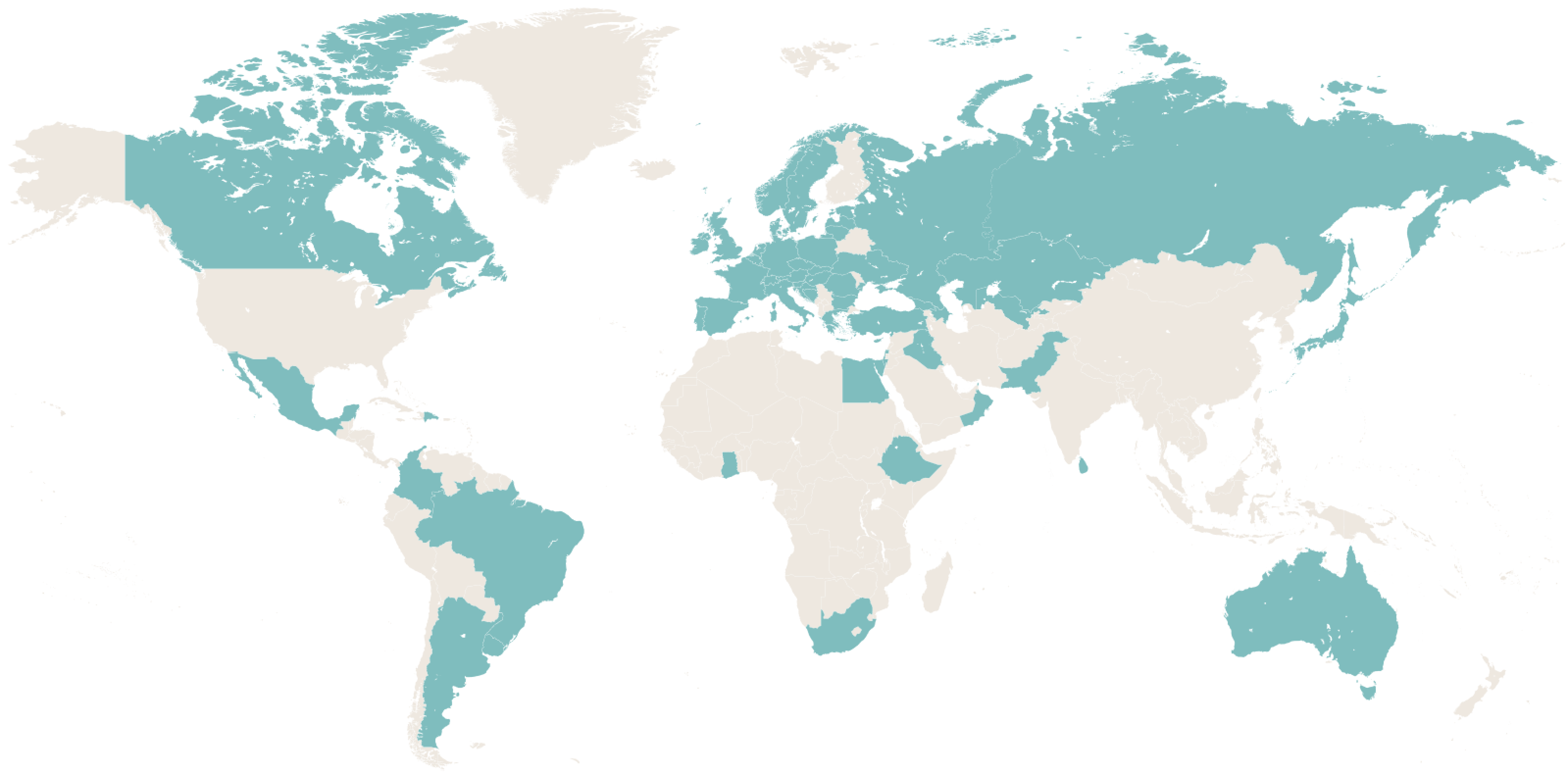
The 2024 European Atherosclerosis Society Lipid Clinic Network Survey targeted leading physicians and senior collaborators from the EAS Lipid Clinic Network, which at that time included over 470 clinics across 55 countries on six continents.
The focus was on organization and operation of lipid clinics, risk assessment methods, implementation of guidelines, diagnostic tests, availability and reimbursement of lipid-lowering therapies, follow-up practices, use of registries, coordination of care, staffing models, and training opportunities and challenges. The results of this survey provided inspiration for the content of the present consensus statement, a fraction of the results is presented below.
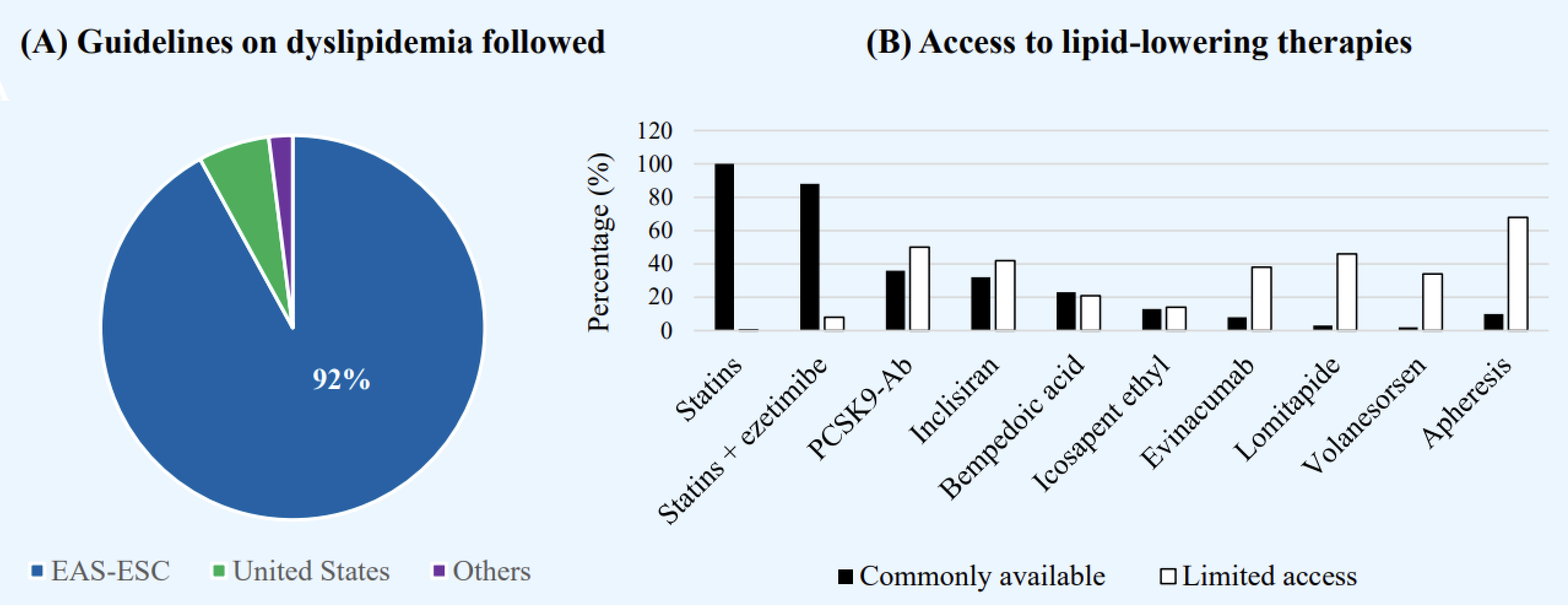
Data was collected from 121 participants in 44 countries. Notably, 92% followed the ESC/EAS Guidelines on Dyslipidaemia and Cardiovascular Prevention3,4 or equivalent national guidelines (Figure 2 A), and 53% used the European SCORE risk calculators.
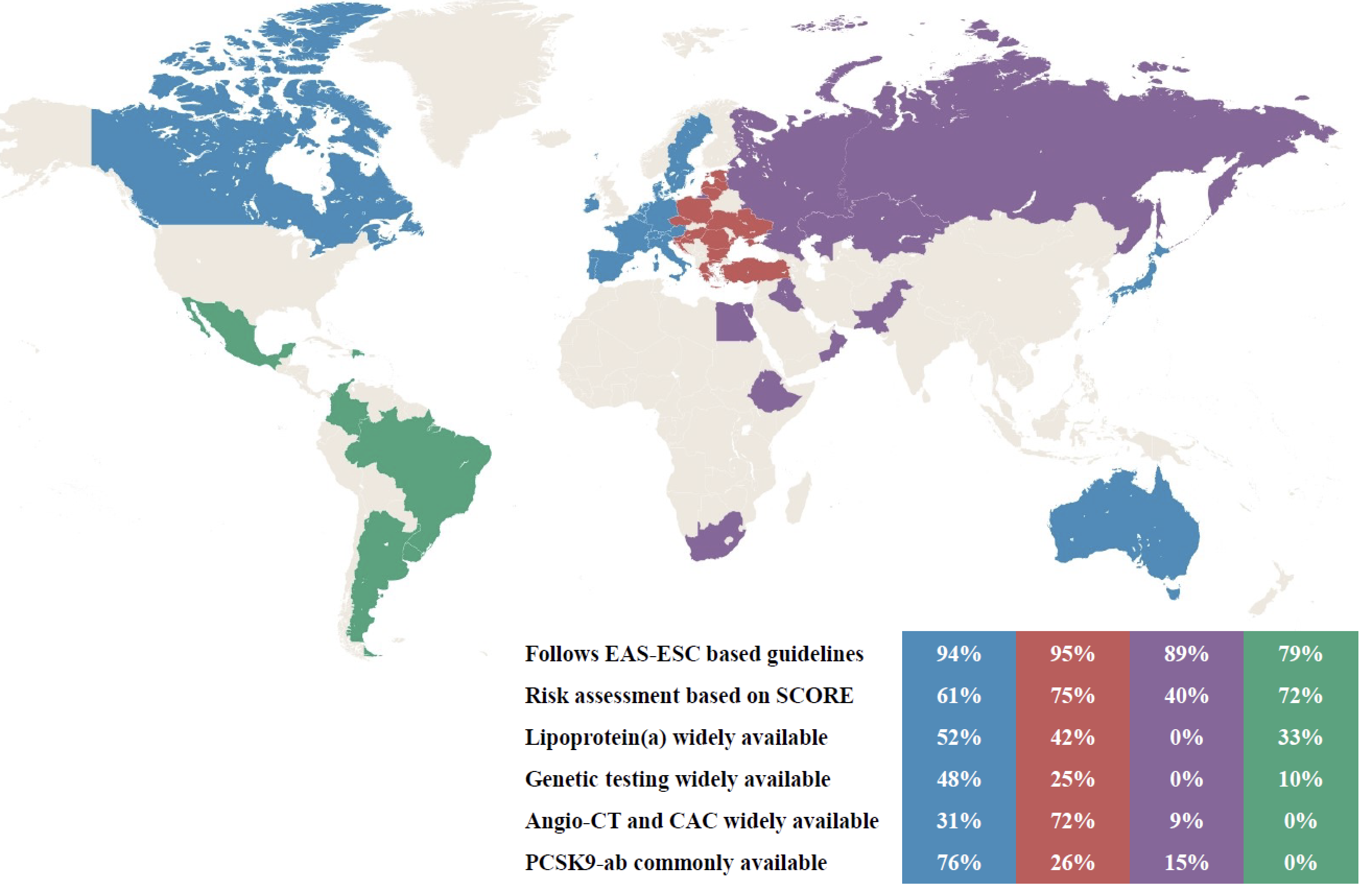
Lipoprotein(a) measurement was available in 44% of lipid clinics, and genetic tests for molecular phenotyping if lipid disorders in 24%. Availability varied by region, as shown in Figure 3. Countries were grouped based on the number of responses, income levels, and global location.
Importantly, all lipid clinics had access to statins and 93% had access to ezetimibe, while access to more advanced lipid-lowering therapies such as PCSK9 inhibitor antibodies was more limited (Figure 2 B), except in Western Europe, North America, Australia, New Zealand, and Japan.
2024 European Atherosclerosis Society Lipid Clinic Network Survey of Lipid Clinics.
Staffing included at least physicians, nurses, and dietitians in 69% of clinics, and multidisciplinary meetings were held in 77%.
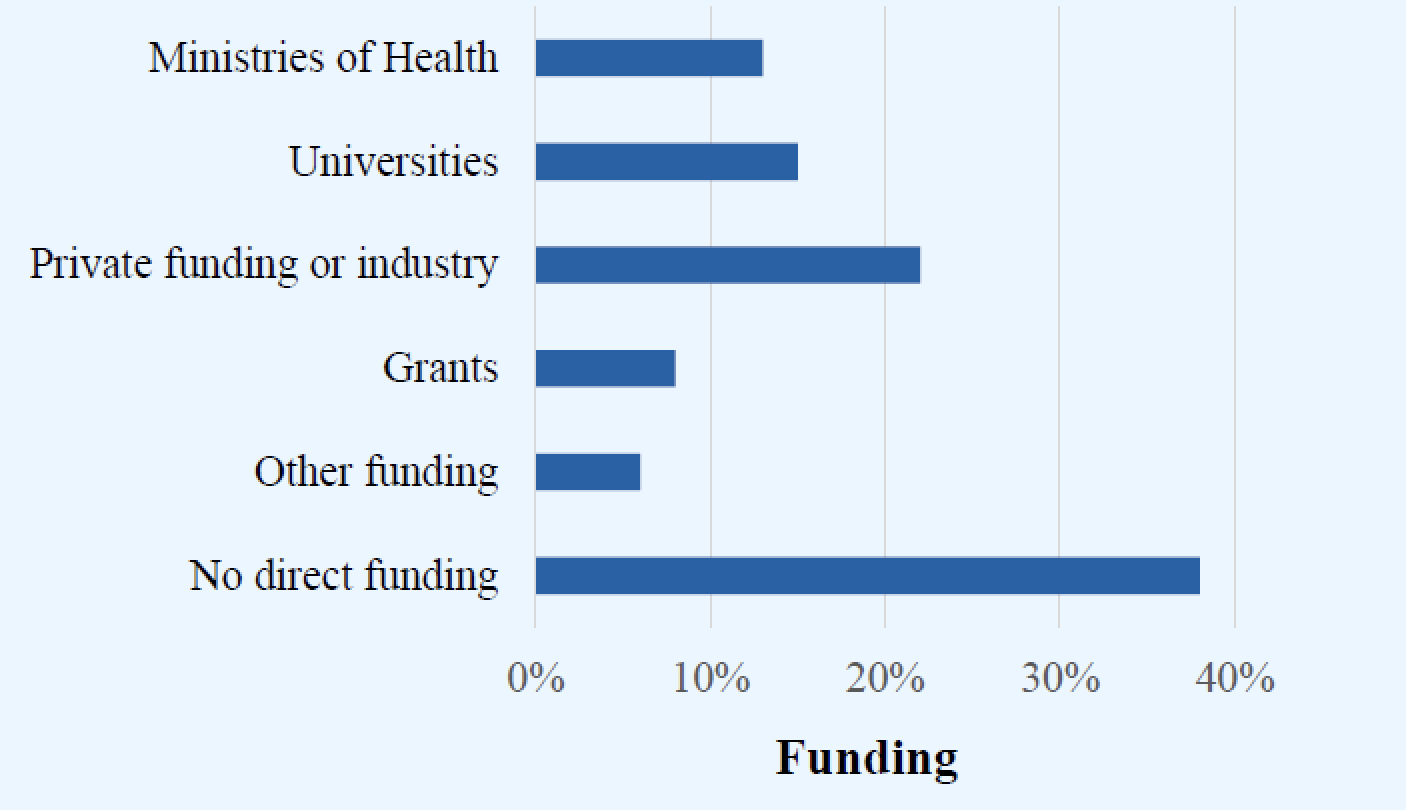
However, opportunities for continued medical education were limited, and only 28% of lipid clinics received direct government or university funding.
A key limitation of this survey is that more established lipid clinics were likely overrepresented. Therefore, results should be seen as upper estimates, with global averages likely lower. The relatively small number of participating clinics also requires cautious interpretation. Importantly, this bias has limited impact on the proposed harmonisation strategies, which are based not only on the survey but on the overall evidence and expert consensus.
In summary, major differences exist between lipid clinics worldwide, highlighting a strong need for harmonisation. Key priorities include improved postgraduate training, better reimbursement for diagnostics and therapies, increased funding and staffing, and enhanced education on hyperlipidaemia across countries.
1. Commission E. The EU cardiovascular health plan (Safe Hearts Plan). 2025.
2. https://datatopics.worldbank.org/world-development-indicators/the-world-by-income-and-region.html TWB. [
3. Mach F, Baigent C, Catapano AL, Koskinas KC, Casula M, Badimon L, et al. 2019 ESC/EAS Guidelines for the management of dyslipidaemias: lipid modification to reduce cardiovascular risk. Eur Heart J. 2020;41(1):111–88.
4. Mach F, Koskinas KC, Roeters van Lennep JE, Tokgozoglu L, Badimon L, Baigent C, et al. 2025 Focused Update of the 2019 ESC/EAS Guidelines for the management of dyslipidaemias. Atherosclerosis. 2025;409:120479.
5. von Eckardstein A, Nordestgaard BG, Remaley AT, Catapano AL. High-density lipoprotein revisited: biological functions and clinical relevance. Eur Heart J. 2023;44(16):1394–407.