


Quality monitoring in lipid clinics
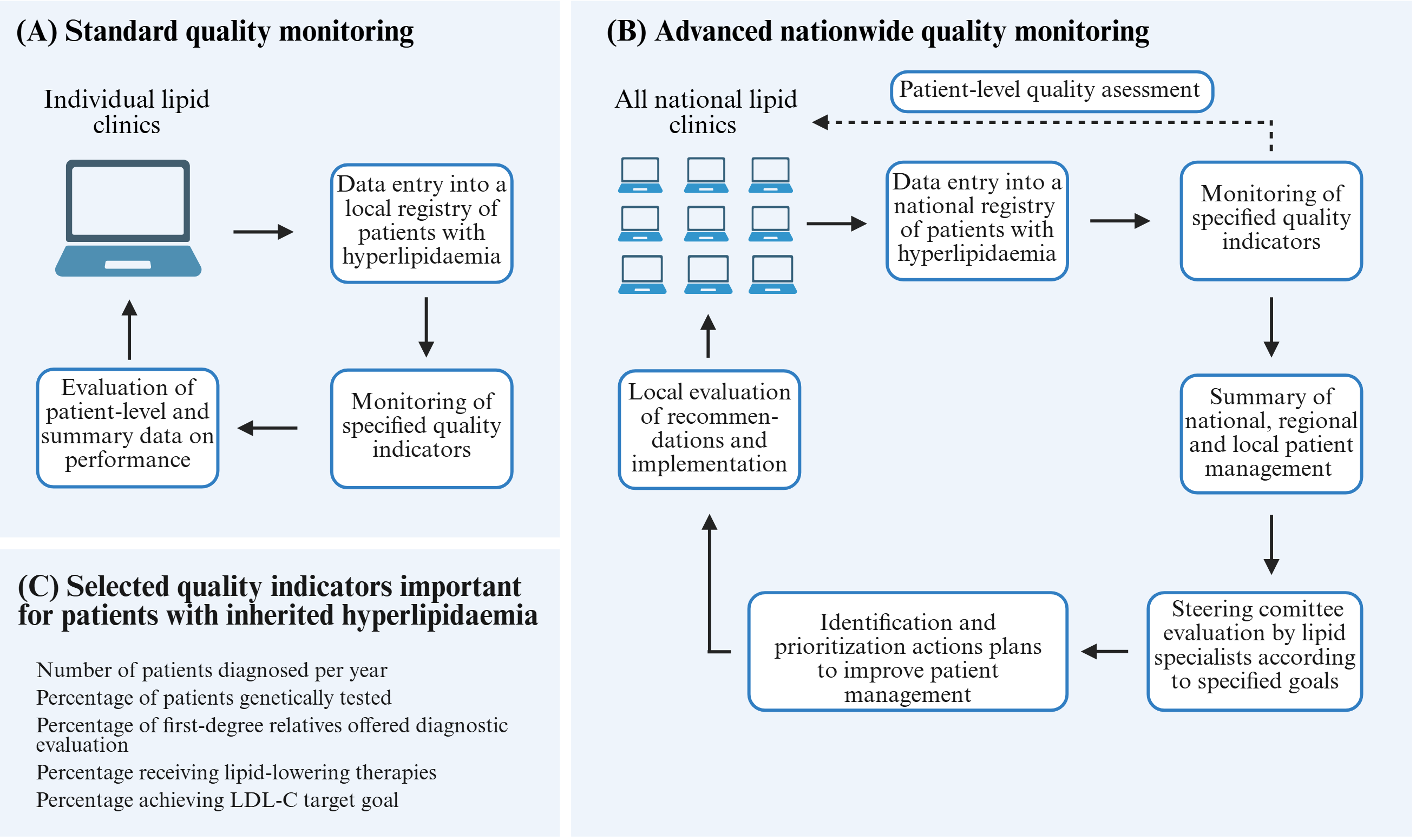
The quality of care in lipid clinics for patients with inherited hyperlipidaemias should ideally be monitored continuously at individual clinic level and nationally to identify areas for improvement (Figure 11).
Quality assessment systems can be implemented within individual clinics (Figure 11A) or at national level (Figure 11B), and should include indicators for comparison over time (Figure 11C). Key indicators include detection and diagnosis, cascade screening, initiation and adherence to lipid-lowering therapy, and achievement of lipid targets. These should be defined by specialists in collaboration with patient representatives and collected in accordance with national regulations.
National monitoring of quality indicators should be evaluated by a committee of lipid specialists and patient representatives, providing feedback and recommendations to local clinics. Key performance indicators for patients with inherited hyperlipidaemia may include the number of patients diagnosed, percentage genetically tested, percentage lipoprotein(a) tested, percentage of first-degree relatives offered diagnostic evaluation, percentage receiving lipid-lowering therapies and the percentage achieving their LDL cholesterol target goal83.
To ensure implementation, national recommendations should be communicated to hospital managers responsible for lipid clinics to support action plans for improvement. From a patient perspective, transparency and individual monitoring are essential to enable active participation in care.
These recommendations are based on experience from Denmark’s national FH quality registry since 202083, and expert opinion supported by successful European implementations.
83. Webpage:https://www.sundk.dk/kliniske-kvalitetsdatabaser/databasen-for-familiaer-hyperkolesterolaemi-dfh/om-databasen/.