

European Atherosclerosis Society consensus statement:
Diagnosis of Familial Hypercholesterolaemia (FH)
Diagnostic criteria
The 2015 EAS consensus suggested LDL-C thresholds for diagnosing FH in children, but recent evidence shows these may miss early cases. Here we propose a modification of these criteria, as shown in Table 1. Genetic testing is encouraged, and clinical management should be considered if LDL-C levels exceed updated thresholds based on age and family history.
Table 1 Comparison of the diagnostic criteria proposed in the current consensus and in the 2015 EAS consensus statement for children with FH
| 2015 Diagnostic Criteria | 2026 Diagnostic Criteria |
| Highly probable FH | Clinical FH |
| ◦ LDL-C ≥5.0 mmol/L (190 mg/dL) measured twice after dietary intervention | ◦ LDL-C >4.5 mmol/L (175 mg/dL) |
| ◦ LDL-C ≥4.0 mmol/L (155 mg/dL) if family history of premature ASCVD and/or high baseline cholesterol in one parent | ◦ LDL-C >3.5 mmol/L (135 mg/dL) if family history of premature ASCVD and/or high baseline cholesterol in one parent |
| ◦ LDL-C ≥3.5 mmol/L (135 mg/dL) if one parent has a genetic diagnosis of FH | ◦ LDL-C >3.0 mmol/L (115 mg/dL) if one parent has a genetic diagnosis of FH |
| Definite FH | Definite FH |
| ◦ if a child has a genetic diagnosis of FH | ◦ if a child has a genetic diagnosis of FH |
Figure 1 shows the different entry points for diagnosis and clinical management of a child suspected to have FH.
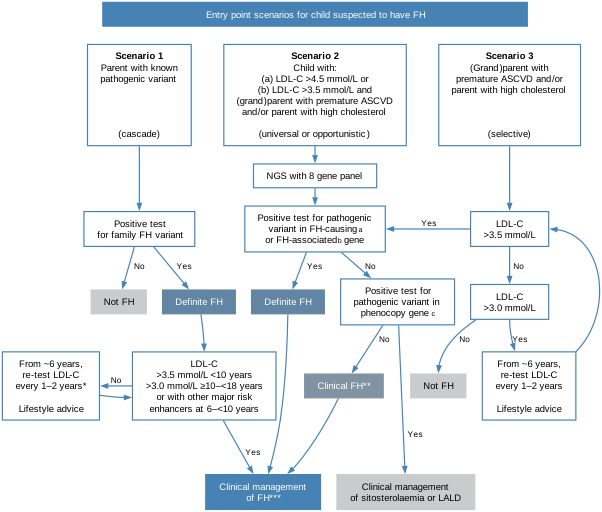
*Rule out primary hypocholesterolaemia.
**Consider elevated lipoprotein(a) and (other) secondary causes.
***Comprises lifestyle advice from diagnosis and starting lipid-lowering therapy between 6 and <10 years for HeFH and from 6 months for HoFH. To convert low-density lipoprotein cholesterol (LDL-C) from mmol/L to mg/dL, multiply the mmol/L value by 38.67. LALD, lysosomal acid lipase deficiency. NGS, next generation sequencing.
Lipoprotein(a) testing
In children diagnosed with FH but without a known genetic variant, one-third have high concentrations of lipoprotein(a) [Lp(a)]. Therefore, Lp(a) testing is recommended at the same time as paediatric FH screening (but not in children under 5 years of age). If a child has elevated Lp(a) [105 mmol/L (50 mg/dL)], cascade testing of parents and grandparents is encouraged to identify family members at increased cardiovascular risk.
Paediatric FH diagnostic tools
Traditional adult FH diagnostic scores do not adequately identify children. A new scoring system, the Familial Hypercholesterolemia Pediatric Diagnostic Score (FH-PeDS), has recently been developed and validated using data from children. It is more accurate at diagnosing children with genetically confirmed FH than tools designed for adults, and it could be a useful tool to decide who should undergo genetic testing. A machine-learning version is available as an online tool. Further validation of FH-PeDS and the machine-learning tool across diverse populations is needed.
Genetic testing
Genetic testing should be offered to any child suspected of having FH to confirm diagnosis. Modern next-generation sequencing (NGS) panels can comprehensively analyse the main FH-causing genes (LDLR, APOB, PCSK9), the less common FH-associated genes (APOE, LDLRAP1), and the phenocopy genes (ABCG5, ABCG8, LIPA) in one run. Established criteria for variant classification must be followed. If a child with a pathogenic FH variant has unexpectedly low LDL-C concentrations, additional testing for genes linked to primary hypocholesterolaemia or enhanced lipoprotein catabolism should be considered, as these may mask FH and complicate family screening.
If the family FH variant is already known, only a targeted confirmatory test is needed, which can be performed using cord blood at birth or a simple saliva or buccal swab. Genetic diagnosis helps families decide on lipid-lowering treatment (LLT) for the child and prompts testing of first-degree relatives, benefitting overall family health.
Box 2 Advantages and disadvantages of genetic testing for familial hypercholesterolaemia (FH)
| Advantages of a confirmed genetic diagnosis of FH | Disadvantages |
| ◦ Confirms definitive FH and establishes the FH diagnosis unequivocally | ◦ Potential confusion of diagnosis if a variant of uncertain significance is found |
| ◦ Supports the clinician when deciding which lipid-lowering therapy (LLT) to use | ◦ Life and health insurance issues in some countries |
| ◦ Helps the parents decide whether and when their child should start LLT | ◦ Potential stigmatization |
| ◦ Enables access to special therapies | ◦ Psychological distress for individuals and their family |
| ◦ Prompts testing of parents and siblings who are at 50% risk of carrying the FH-causing variant | |
| ◦ Encourages cascade testing in the extended family | |
| ◦ Creates awareness that FH is passed on to the next generation | |
| ◦ Encourages adherence to LLT | |
| ◦ Encourages adherence to a healthy lifestyle and not smoking/vaping | |
| ◦ Creates awareness that atherosclerosis starts at birth |
Genetic counselling
Genetic testing for suspected FH in children should be preceded by genetic counselling. Diagnostic genetic testing should ideally be requested by a clinician with skills in counselling, genetics, and care of families with FH. Testing must be based on shared decision-making and informed agreement from the parent or guardian, with clear communication of results and consideration of the family’s comprehension and background.
Counselling should highlight the benefits of early diagnosis and lipid-lowering treatment and help families understand the value of cascade testing and its role in preventing available cardiovascular disease in other family members. Counselling is particularly important for children with hypercholesterolaemia with a variant of uncertain significance, no detectable pathogenic variant but likely polygenic hypercholesterolaemia, or a pathogenic variant with normal cholesterol levels. Pre-conception counselling is crucial if both parents carry a pathogenic FH variant.