

European Atherosclerosis Society consensus statement:
Published in European Heart Journal, May 25, 2026
DOI: 10.1093/eurheartj/ehag382
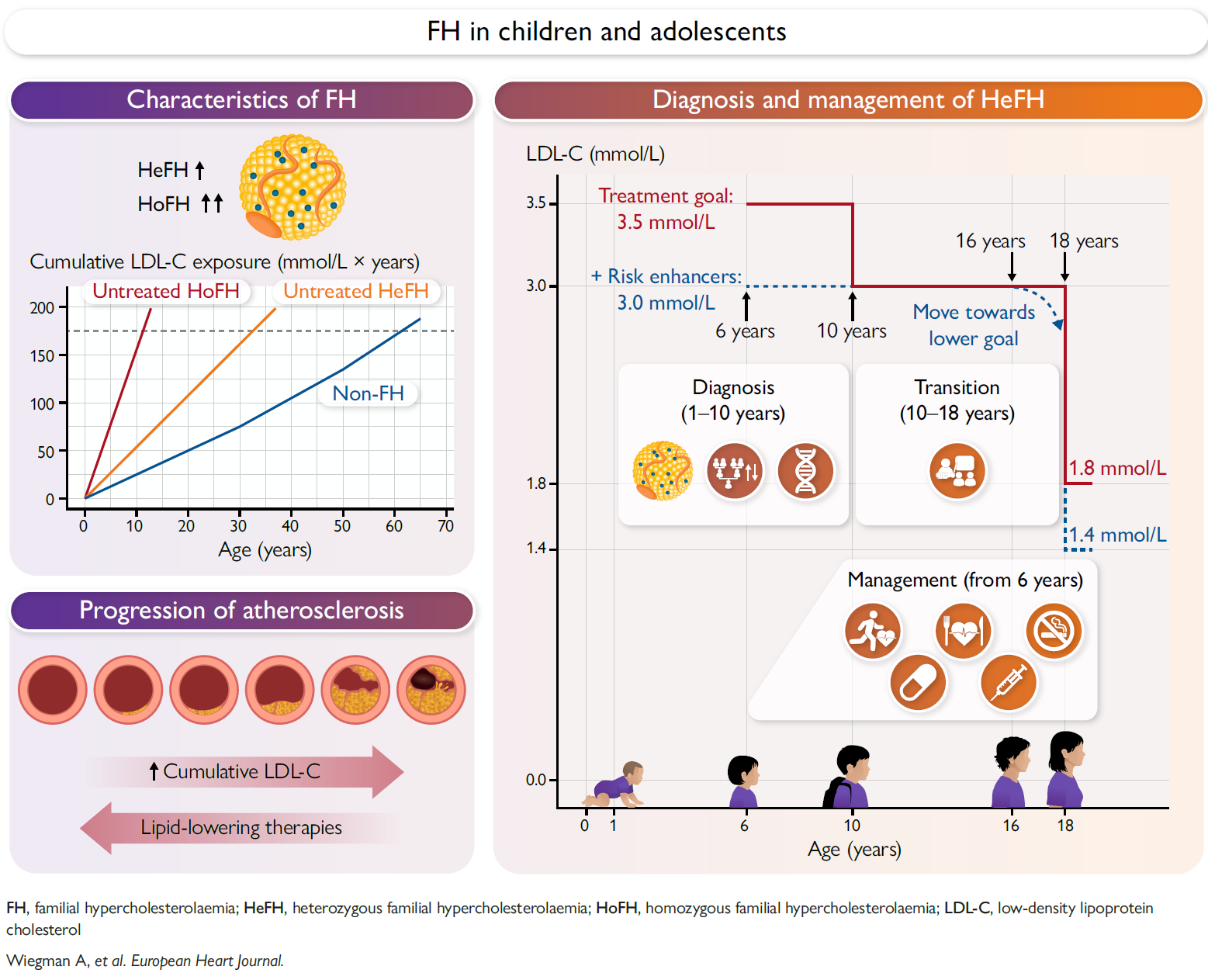
Familial hypercholesterolaemia (FH) is a common genetic disorder characterized by lifelong elevated low-density lipoprotein cholesterol (LDL-C) concentrations, which increase the risk of premature atherosclerotic cardiovascular disease (ASCVD). FH occurs in two forms: Heterozygous FH (HeFH), affecting approximately 1 in 300 people worldwide, and the rarer Homozygous FH (HoFH), affecting around 1 in 300,000. Individuals with HoFH, if untreated, are at extremely high risk of cardiovascular complications—even in childhood.
Early diagnosis and treatment in childhood can significantly improve or normalize life expectancy. However, underdiagnosis and undertreatment remain major challenges: in Europe, less than 10% of affected children are currently identified, and most people with FH are diagnosed far too late. Functional and morphological changes in the arterial wall have been observed in children with FH even before adolescence, highlighting the importance of early intervention.
In the decade since the 2015 European Atherosclerosis Society (EAS) consensus statement on FH in children, knowledge of the pathogenesis of FH has increased markedly, and a wider range of lipid-lowering therapies (LLTs) is now available. This current EAS consensus statement provides revised diagnostic criteria, updated LDL-C treatment goals, and practical guidance on managing FH in children and adolescents. It emphasizes the importance of starting LLTs early, sometimes from the age of 6, and provides treatment algorithms for both HeFH and HoFH. The statement also addresses the transition to adult care and implementation strategies.
This website breaks down the consensus paper into its key sections and explains each part in a clear and accessible way. The aim is to support clinicians, patients, and other stakeholders in understanding the recommendations and applying them in practice.
Early detection and optimal treatment as advocated in this consensus statement are crucial to improving life expectancy for children and adolescents with FH.
What is new in this EAS consensus statement?
| Box 1 What is new in this EAS consensus statement on children with FH? |
| Updated diagnostic criteria to improve diagnostic sensitivity |
| Proposed lower age to start treatment |
| Proposed lower LDL-C treatment goals, made possible by the availability of new LLTs |
| Emphasis on the importance of reducing cumulative LDL-C exposure |
| Updated treatment algorithms and the latest evidence supporting the use of novel LLTs |
| Proposals to facilitate improved transition to adult care and implementation strategies |
From the Consensus paper session at EAS Congress 2026
Webinars on-demand
Webinars will be available shortly
Why is this consensus paper important?
Prof Jeanine Roeters van Lennep
Prof Albert Wiegman