

HoFH Awareness Day 2026
Homozygous Familial Hypercholesterolaemia (HoFH) Awareness Day shines a light on a rare and serious genetic condition that causes extremely high cholesterol levels from birth. Without early diagnosis and treatment, HoFH can lead to premature cardiovascular disease, even in childhood or adolescence. This day aims to raise awareness, support early detection, and advocate for better access to life-saving therapies for those affected worldwide.
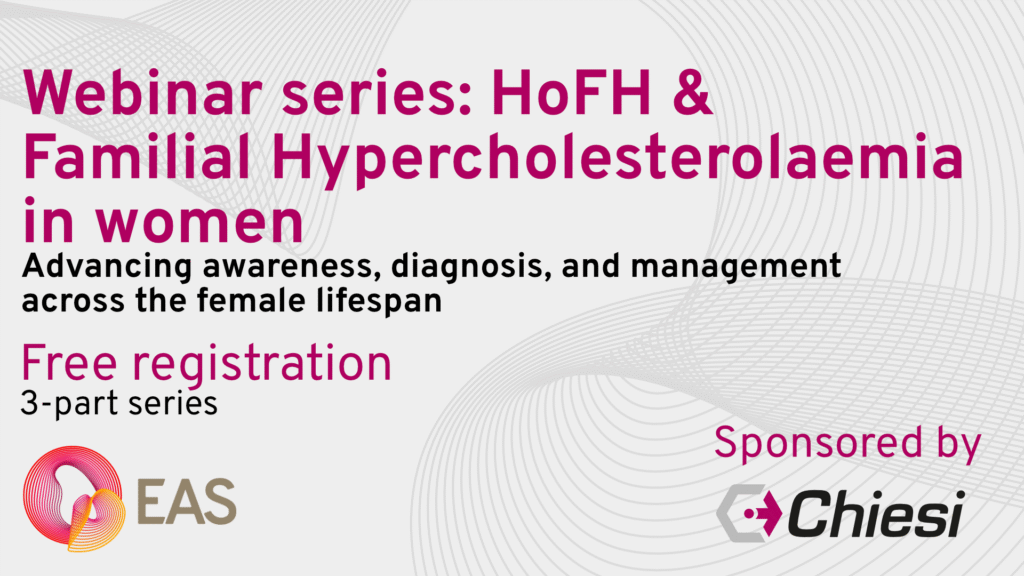
Discover our latest webinar series: HoFH & Familial Hypercholesterolaemia in women. Explore key insights across three focused sessions and stay up to date with the latest guidance and practical approaches for managing FH in women.
Consensus & Clinical Guidance
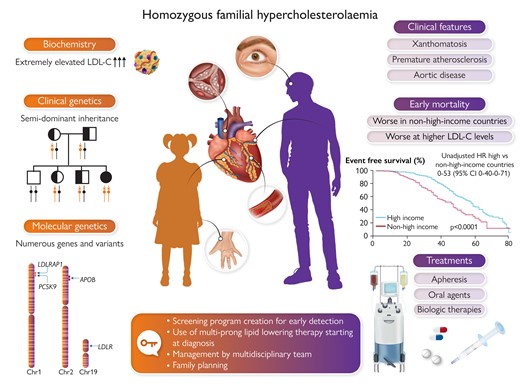
- 2023 Update on European Atherosclerosis Society Consensus Statement on Homozygous Familial Hypercholesterolaemia: new treatments and clinical guidance
Marina Cuchel, Frederick J Raal, Robert A Hegele et al.
European Heart Journal, Volume 44, Issue 25, 1 July 2023, Pages 2277–2291, https://doi.org/10.1093/eurheartj/ehad197 - Rare dyslipidaemias, from phenotype to genotype to management: a European Atherosclerosis Society task force consensus statement
Robert A. Hegele et al.
The Lancet Diabetes & Endocrinology, Volume 8, Issue 1, January 2020, Pages 50-67, DOI: 10.1016/S2213-8587(19)30264-5
Talks on HoFH
- Efficacy and safety of evinacumab in patients with HoFH: A review of the clinical data in adult, adolescent and paediatric patients
- Zodasiran (ARO-ANG3), An Investigational RNAi Therapeutic, Demonstrates Profound And Durable Reductions In Ldl-cholesterol, Apolipoprotein B, And ANGPTL3 In Patients With HoFH; Gateway Final Results
- Homozygous familial hypercholesterolaemia (HoFH): Aetiology, presentation and diagnosis through the lens of the HICC registry – Where are the ‘missing’ patients?
- Lomitapide In Paediatric Patients With Homozygous Familial Hypercholesterolaemia (HoFH) – Analysis Of Long-term (104-week) Safety And Efficacy From The Aph-19 Study
NEW! Rare dyslipidaemias series
While the prevalence of each individual rare lipid disorder is low, collectively they are important and the busy specialized practitioner will encounter patients with these conditions. Lipidologists need to be familiar with their diagnosis and treatment as they may be associated with high morbidity and mortality.
This series of webinars is aimed at advancing knowledge on genetic dyslipidaemias, with a focus on rare forms, such as Homozygous familial hypercholesterolaemia (HoFH) and Hypolipoproteinaemias.
Over six webinars, EAS experts talk us through an overview of the rare lipid disorders a healthcare professional might come across, challenges in diagnosis and management of patients, genetic testing, therapy and treatment options.
Access the online courseKey scientific publications
To mark Homozygous Familial Hypercholesterolaemia (HoFH) Awareness Day on 4 May, Atherosclerosis is highlighting five recent publications that address key challenges in the therapeutic management of HoFH. These studies expand our understanding of how to manage the disease during the reproductive period, how to address cumulative cardiovascular risk factors, and how to utilise novel LDLR-independent therapies to optimise patient outcomes.
Real-world family planning and pregnancy practices in women with homozygous familial hypercholesterolemia
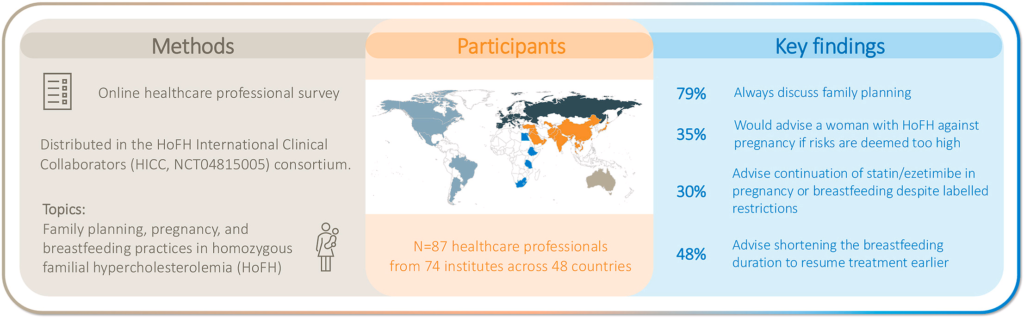
In an international survey of 87 healthcare professionals from 48 countries, Mulder, Roeters van Lennep, and their colleagues examined the distinctive challenges faced by women with HoFH during family planning, pregnancy, and breastfeeding.
The authors reveal significant global variability in care, noting that, although most recommend discontinuing lipid-lowering therapies (LLTs) during conception and pregnancy, around 30% advise continuing or restarting statins or ezetimibe despite labelled contraindications. The authors emphasise the urgent need for global, evidence-based guidelines and advocate shortening the breastfeeding period to facilitate the earlier resumption of LLTs.
To the full articleTraditional cardiovascular risk factors and their association with atherosclerotic cardiovascular disease in homozygous familial hypercholesterolemia: A cross-sectional analysis from the HICC registry
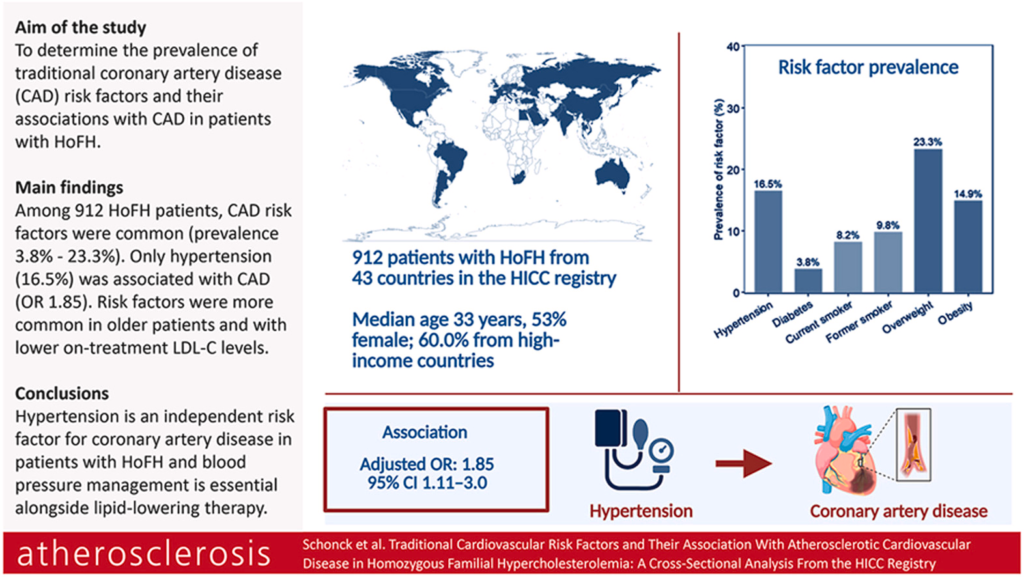
In a cross-sectional analysis from the HICC registry, Schonck, Reeskamp and colleagues investigated the impact of traditional cardiovascular risk factors on atherosclerotic cardiovascular disease in 912 patients with HoFH. They revealed that hypertension was independently associated with coronary artery disease in this extremely high-risk population, whereas diabetes, smoking and obesity did not show statistically significant associations. These findings emphasise that, alongside intensive LDL-cholesterol lowering, identifying and managing hypertension remains crucial in patients with HoFH.
To the full articleAssessment of LDL receptor-dependent lipid lowering therapies in patients with homozygous familial hypercholesterolemia according to functional genotype
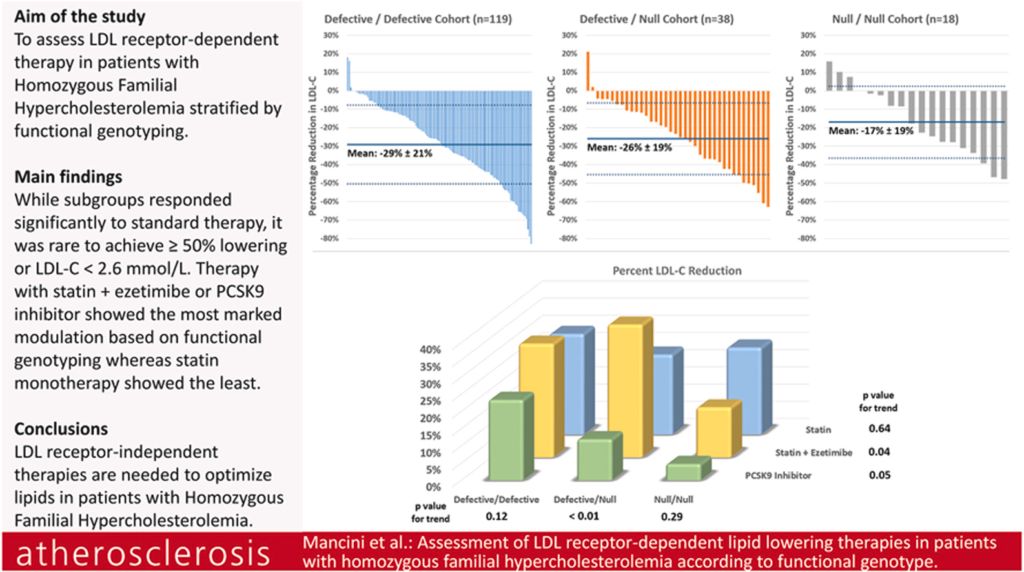
Mancini et al. examined the relationship between functional LDLR genotypes and responses to conventional lipid-lowering therapies, using data from 175 patients in the HICC registry. Their study demonstrates that, while responses to ezetimibe and PCSK9 inhibitors progressively attenuate in patients with defective/null and null/null genotypes, the LDL-C reduction achieved by statins (25–29%) remains consistent regardless of genotype status. This suggests that statins may act via secondary, non-LDLR-dependent mechanisms, and that optimal LDL-C target achievement remains rare.
To the full articleEfficacy of evinacumab by genotype and low-density lipoprotein receptor function in patients with homozygous familial hypercholesterolaemia: A subanalysis from the ELIPSE open-label extension study
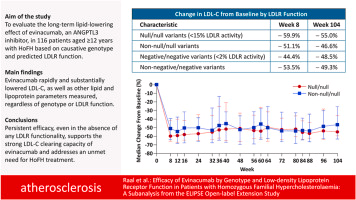
Raal et al. present a subanalysis of the ELIPSE open-label extension study, showing that the ANGPTL3 inhibitor evinacumab is highly effective in lowering LDL-C, regardless of LDLR function. Synthesising evidence from 116 patients aged 12 years and over, they confirm that, following 104 weeks of therapy, evinacumab achieves sustained LDL-C reductions of approximately 50%, regardless of whether patients possess true homozygous or compound heterozygous mutations. This emphasises the importance of LDLR-independent therapies in managing the most severe HoFH phenotypes effectively.
To the full articleEvinacumab in patients aged 5–17 years with homozygous familial hypercholesterolemia
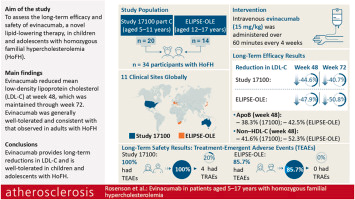
Rosenson et al. established the safety and efficacy of evinacumab in paediatric patients (aged 5–11 years) and adolescents (aged 12–17 years) receiving stable background therapy, including lipoprotein apheresis. They demonstrate that evinacumab significantly reduces mean LDL-C by 41% in the paediatric cohort and by 51% in the adolescent cohort after 72 weeks. They also show that the treatment is generally well tolerated, providing an important therapeutic option for paediatric patients who fail to achieve LDL-C goals despite receiving the best available standard treatments.
To the full articleEmbrace the Power of Social Media
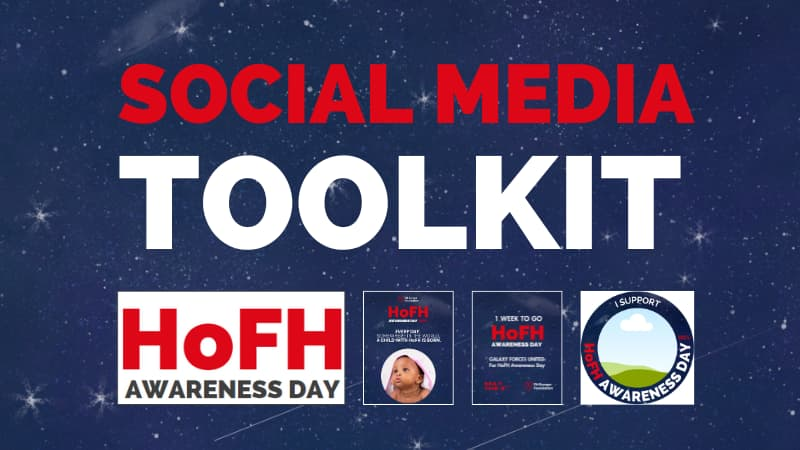
Access the multilingual toolkit and help amplify the message of HoFH Awareness Day across your networks. By sharing campaign visuals and messages, you can help reach a wider audience and strengthen our global voice. To unite us always use the hashtag #Unite4HoFH. You might also consider #KnowHoFH.
The toolkit includes:
- Logo
- Virtual background
- Email signature visual
- Social media profile photo frame template
- Countdown visuals
- Key messages
Key messages and countdown visuals are available in many languages.
Access the Social Media ToolkitEAS Academy
At EAS Academy, we have gathered all educational resources on this topic, including:
- Case-based discussions
- FH & HoFH joint webinar series (2023)
- Expert lectures and webinars
EAS Paediatric Lipid Working Group
The EAS recently established the Paediatric Lipid Working Group, strengthening the Society’s commitment to improving the detection and management of lipid disorders in children and adolescents.
Learn more about the Paediatric Lipid Working GroupAtheroTalk episodes
AtheroTalk episodes feature concise expert interviews and discussions with leading researchers and clinicians in the field of lipidology.
Listen to our expertsEAS Lipid Clinic Network
The EAS Lipid Clinic Network (EAS-LCN) is a global collaborative network connecting lipid clinics and healthcare professionals dedicated to the prevention, diagnosis, and management of lipid disorders. The network promotes high-quality, equitable patient care worldwide through harmonisation, education, and knowledge exchange.
To the Lipid Clinic NetworkFH Week 2025
Selected sessions and materials from FH Week remain highly relevant for clinicians managing rare lipid disorders.
Access FH Week resources