

Rare Disease Day 2026
Improving recognition, diagnosis, and management of rare dyslipidaemias
Rare lipid disorders such as homozygous familial hypercholesterolaemia (HoFH) and familial chylomicronaemia syndrome (FCS) are serious, often underdiagnosed conditions associated with high cardiovascular and metabolic risk. Early identification and specialised management are critical to improve patient outcomes.
This page brings together key EAS educational resources, scientific publications, and accredited learning opportunities to support clinicians, researchers, and healthcare professionals.
Why the Safe Hearts Plan matters on Rare Disease Day?
On Rare Disease Day, we highlight the importance of early detection and prevention for rare inherited conditions that significantly increase cardiovascular risk. The European Commission’s Safe Hearts Plan, published in December 2025, is the first EU-wide initiative to address cardiovascular disease comprehensively.
Crucially, the Plan explicitly recognises inherited lipid disorders, such as familial hypercholesterolaemia (FH) and elevated lipoprotein(a), including severe forms like homozygous FH (HoFH). By promoting early-life screening, personalised prevention, and family-based approaches, the Safe Hearts Plan offers a real opportunity to prevent decades of cumulative arterial damage and protect entire families.
For Rare Disease Day, this Plan underlines that early identification and intervention are not just best practice – they can be lifesaving. It sets a framework for Europe to move from late-stage treatment to proactive, lifelong cardiovascular care.

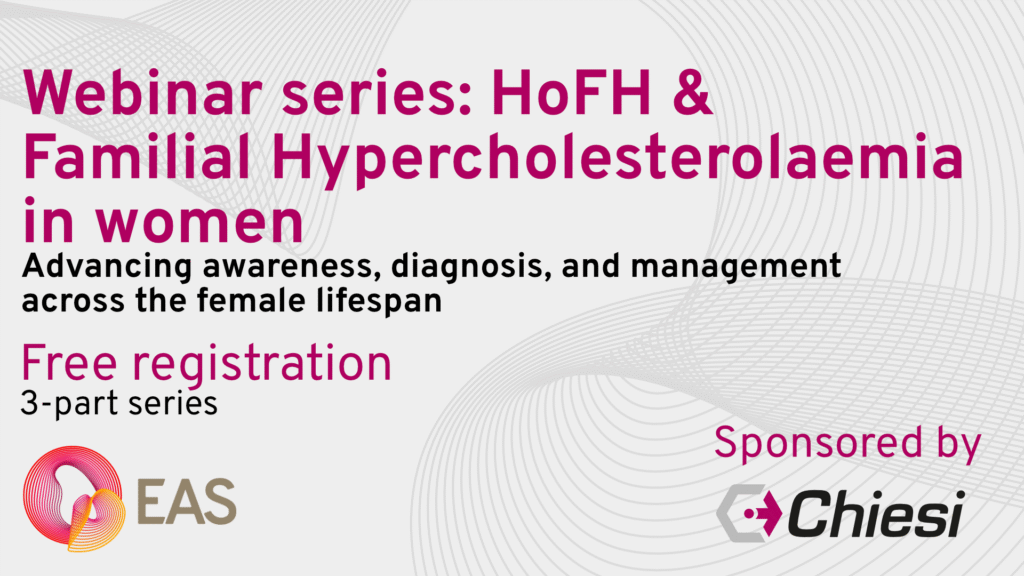
Discover our latest webinar series: HoFH & Familial Hypercholesterolaemia in women. Explore key insights across three focused sessions and stay up to date with the latest guidance and practical approaches for managing FH in women.
Consensus & Clinical Guidance
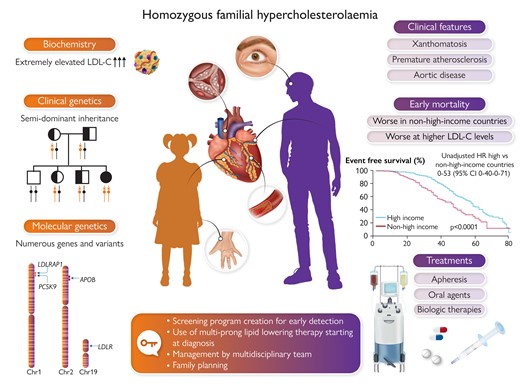
- 2023 Update on European Atherosclerosis Society Consensus Statement on Homozygous Familial Hypercholesterolaemia: new treatments and clinical guidance
Marina Cuchel, Frederick J Raal, Robert A Hegele et al.
European Heart Journal, Volume 44, Issue 25, 1 July 2023, Pages 2277–2291, https://doi.org/10.1093/eurheartj/ehad197 - Rare dyslipidaemias, from phenotype to genotype to management: a European Atherosclerosis Society task force consensus statement
Robert A. Hegele et al.
The Lancet Diabetes & Endocrinology, Volume 8, Issue 1, January 2020, Pages 50-67, DOI: 10.1016/S2213-8587(19)30264-5
Talks on FCS
- Pharmacological therapy in patients with Familial and Multifactorial Chylomicronemia Syndromes
- The metabolic basis of FCS
- Diagnostic Challenges In Familial Chylomicronemia Syndrome: The Relevance Of Lipoprotein Lipase Activity Beyond Scoring Systems
NEW! Advanced Course in Rare Lipid Disorders – CME-accredited

A comprehensive, CME-accredited programme covering diagnosis, genetics, and management of rare lipid disorders.
As an exclusive member benefit, EAS members can take the Rare Lipid Disorders online course free of charge. The CME-accredited programme awards 2 CME credits upon completion.
Key scientific publications
Rare Disease Day on 28 February offers an important opportunity to raise awareness of rare lipoprotein disorders, which have a significant impact on health and well-being throughout life.
To mark the occasion, Atherosclerosis highlights recent publications that deepen our mechanistic understanding of these conditions and refine their clinical management, from familial chylomicronemia syndrome to homozygous familial hypercholesterolaemia.
Effect of olezarsen on lipoprotein-associated ApoC-III levels in patients with familial chylomicronemia syndrome

Yang et al. examine the impact of the APOC3 antisense oligonucleotide olezarsen on apoC-III, as carried by various lipoprotein fractions, in adults with genetically confirmed familial chylomicronemia syndrome. In the phase 3 BALANCE trial, monthly olezarsen treatment resulted in significant reductions in total plasma apoC-III and triglyceride levels over an extended period. The most pronounced effects were observed in apoC-III associated with total apoB- and apoA-I–containing particles. Reductions were also observed for apoC-III on apoB-100 and Lp(a), suggesting potential relevance not only for pancreatitis risk in FCS, but also for atherogenic lipoprotein profiles in broader high-risk populations.
To the full articleThe hidden burden of kidney damage in chylomicronemia syndromes

D’Erasmo et al. shift the focus away from pancreatitis by systematically characterising renal involvement in familial and multifactorial chylomicronemia syndromes. Renal biopsies taken from patients exhibiting persistent chylomicronemia alongside nephrotic-range proteinuria revealed evidence of lipid-driven glomerular injury. This was characterised by the presence of foam cell infiltration and lipoprotein ‘pseudothrombi’, which are consistent with a phenotype resembling lipoprotein glomerulopathy in the absence of pathogenic APOE variants. In a pooled cohort of 84 adults with genetically defined FCS or MCS, over one-third had a history of proteinuria, almost half had reduced eGFR and more than 40% had hyperfiltration, which far exceeds the rates observed in general population surveys. Hypertension and diabetes emerged as major correlates of proteinuria and eGFR decline, highlighting the importance of systematic renal monitoring and rigorous management of cardiometabolic comorbidities in these rare lipid disorders.
In an accompanying editorial, Moulin presents these observations as a potential ‘new dark side’ of persistent chylomicronemia. He argues that nephropathy should now be considered, alongside acute pancreatitis and ASCVD, as a key complication of FCS and severe MCS. He calls for replication in independent cohorts and for prospective renal surveillance in ongoing trials of anti-apoC-III and anti-ANGPTL3 therapies in patients with hyperchylomicronemia.
To the full articleAssessment of LDL receptor-dependent lipid lowering therapies in patients with homozygous familial hypercholesterolemia according to functional genotype
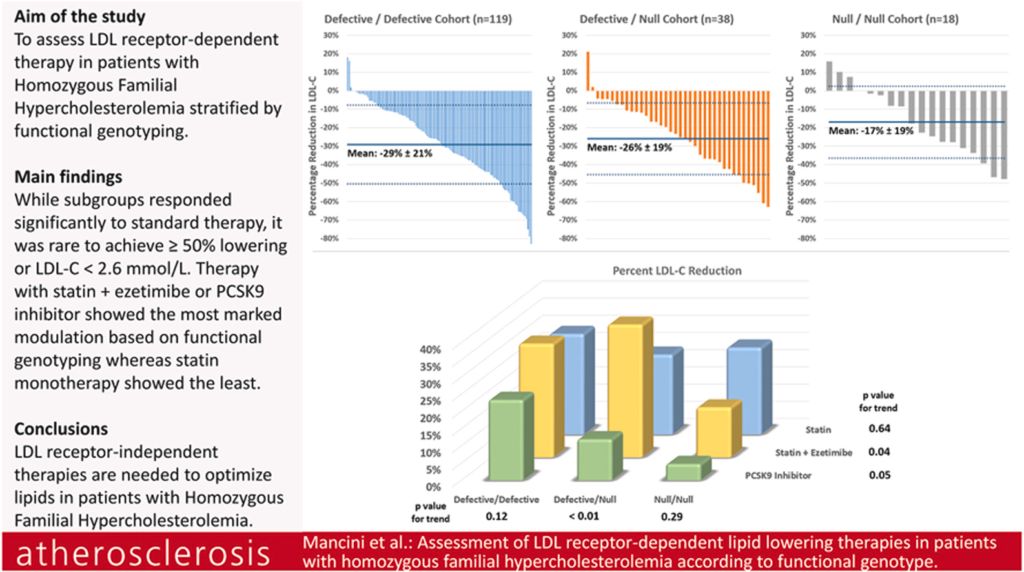
Mancini et al. examined how the functional LDLR genotype influences the response to LDL receptor-dependent lipid-lowering therapy in a large, international cohort of 175 patients with homozygous familial hypercholesterolaemia. Statins, ezetimibe and PCSK9 inhibitors all produced statistically significant reductions in LDL-C across defective/defective, defective/null and null/null LDLR genotypes. However, achievement of guideline-level targets was exceedingly rare and completely absent in patients with two null alleles. Responses to statin plus ezetimibe, and to add-on PCSK9 inhibition, followed the expected gradient of residual receptor function. However, statin monotherapy produced similar relative reductions in LDL-C irrespective of genotype, which suggests the existence of additional non-LDLR-dependent mechanisms of action. This work emphasises the need for multi-agent therapy for all HoFH patients and the importance of improving access to LDLR-independent treatments.
Taken together, these articles exemplify how rare lipoprotein disorders can shed light on fundamental pathophysiology while simultaneously reshaping clinical care pathways. As we mark Rare Disease Day on 28 February, they also remind us that sustained collaboration between specialised centres, industry and patient communities is essential to translate mechanistic insight into meaningful long-term outcomes in these rare yet highly informative conditions.
To the full articleRare Lipid Disorder Courses on-demand
EAS run Rare Lipid Disorder Courses to improve recognition and understanding in this. The courses’ objectives are to review practical aspects of evaluation and management, and to describe real clinical cases of these disorders.
Rare Lipid Disorders Courses available on-demandEAS Academy
At EAS Academy, we have gathered all educational resources on this topic, including:
- Case-based discussions
- FH & HoFH joint webinar series (2023)
- Expert lectures and webinars
EAS Paediatric Lipid Working Group
The EAS recently established the Paediatric Lipid Working Group, strengthening the Society’s commitment to improving the detection and management of lipid disorders in children and adolescents.
Learn more about the Paediatric Lipid Working GroupAtheroTalk episodes
AtheroTalk episodes feature concise expert interviews and discussions with leading researchers and clinicians in the field of lipidology.
Listen to our expertsEAS Lipid Clinic Network
The EAS Lipid Clinic Network (EAS-LCN) is a global collaborative network connecting lipid clinics and healthcare professionals dedicated to the prevention, diagnosis, and management of lipid disorders. The network promotes high-quality, equitable patient care worldwide through harmonisation, education, and knowledge exchange.
To the Lipid Clinic NetworkFH Week 2025
Selected sessions and materials from FH Week remain highly relevant for clinicians managing rare lipid disorders.
Access FH Week resources