

EAS Consensus Statement: FH in children and adolescents

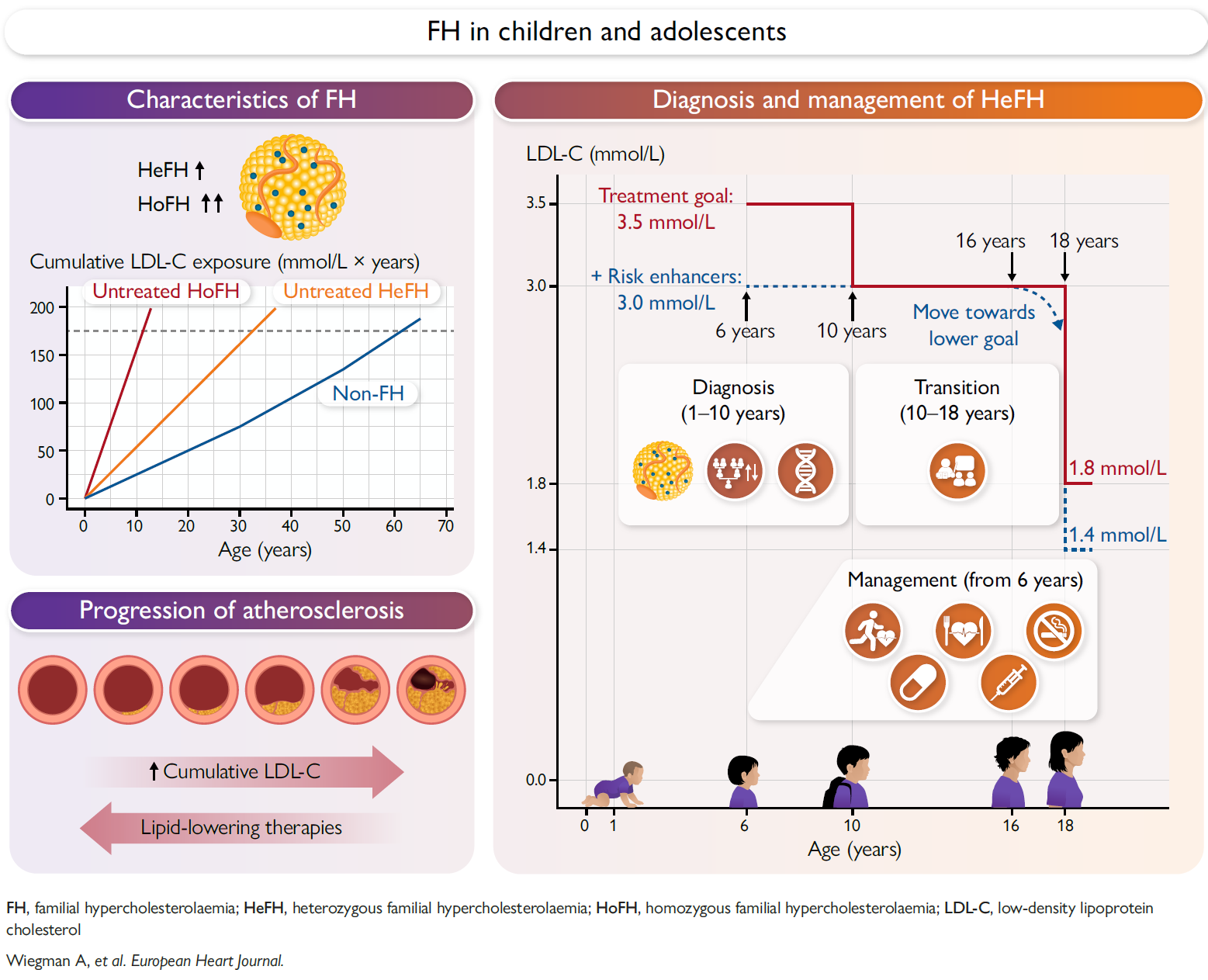
Familial hypercholesterolaemia (FH) is a common genetic disorder characterized by lifelong elevated low-density lipoprotein cholesterol (LDL-C) concentrations, which increase the risk of premature atherosclerotic cardiovascular disease (ASCVD). FH occurs in two forms: Heterozygous FH (HeFH), affecting approximately 1 in 300 people worldwide, and the rarer Homozygous FH (HoFH), affecting around 1 in 300,000. Individuals with HoFH, if untreated, are at extremely high risk of cardiovascular complications—even in childhood.
Early diagnosis and treatment in childhood can significantly improve or normalize life expectancy. However, underdiagnosis and undertreatment remain major challenges: in Europe, less than 10% of affected children are currently identified, and most people with FH are diagnosed far too late. Functional and morphological changes in the arterial wall have been observed in children with FH even before adolescence, highlighting the importance of early intervention.
Read more