

Review of the year 2024, by EAS President, Prof Kausik Ray

As 2024 comes to a close, it also marks the end of my time as President of the European Atherosclerosis Society (EAS). This moment is not just a farewell, but a heartfelt expression of gratitude to each and every one of you. The past four years have been an extraordinary journey – filled with growth, challenges, and unwavering commitment to our shared mission. I am deeply thankful for the opportunities I’ve had to work alongside so many of you, for the hard work we’ve put in together, and for all we’ve achieved together. I also recognize the valuable lessons we’ve learned through our mistakes, as they’ve shaped us for the better. None of this would have been possible without your support. Your trust in me as President is something I will always cherish.

Before stepping down, I’d like to reflect on some of the key accomplishments of 2024. Our mission has been driven by three guiding pillars: global communities & collaborations, setting the global research and implementation agenda through publications, and educational activities that disseminate knowledge and improve the care of patients globally.
One of my key priorities has been ensuring a smooth transition to the new leadership team. Having spent the past year working alongside Prof. Borge Nordestgaard, who will take over from me in January 2025, I have seen first-hand his clear thinking, strength of character, empathy and interpersonal skills, which make him the right person to lead our society forward. After our first meeting of both the current and newly elected Executive Committee members, I have no doubt that the EAS will continue to thrive under their stewardship with one incoming world-class team taking over as another are set leave. There will be continuity and support for the incoming team as they find their feet, with some former EC members supporting the breadth of activities covered by our society.
This year, we’ve continued our expansion globally, connecting with regions far beyond our European base. Seven new national societies have joined us, bringing our total number of national or regional societies to 39 across the globe.
We also launched the Global Health Regional Alliance Initiative, which will support regional meetings with EAS endorsement on a rotating basis, further strengthening our global connections and reinforcing our position as the “go to” society globally for all things atherosclerosis.
The EAS-LatAm webinar series has been one of the standout successes this year, setting a record with 423 registrants and 208 attendees. This achievement has not only broadened our reach in Latin America but also solidified our credibility with non-English-speaking audiences. As part of our ongoing commitment to inclusivity, we have translated all of our webinars to increase accessibility to a wider audience.
Our Consensus paper pipeline remains strong, with three important papers in progress. These papers are addressing emerging questions in atherosclerosis and cardiovascular disease, and I am grateful to the expert panels working tirelessly to fill knowledge gaps and set priorities for future clinical guidelines. One of these papers, on Systemic Metabolic Disorders and atherosclerosis risk, is under review. Work on Lipid disorders in children and adolescents has begun, and we are finalizing details for a Consensus on atherosclerosis and autoimmunity/inflammation under a new panel of Consensus coordinators as well as a planned update on heterozygous FH, taking into account much of your work through the FHSC.
As we move forward, we are focusing on revitalizing our flagship journal, Atherosclerosis. With the addition of Prof. Katarina Öörni and Prof. Ulrich Laufs to the Executive Committee, we hope to foster closer links with the editorial board, allowing rapid dissemination of the best science from our annual congress and highlighting some of the best papers from Atherosclerosis at each Congress. I am confident that this collaboration between our society and the journal will become even more effective. I would like to express our gratitude to the current Editor-in-Chief, Prof. Arnold von Eckardstein, for his dedication and all that he achieved and welcome Prof. Jan Borén in his new role as Editor-in-Chief.

Our annual Congress, this year in Lyon, was once again the highlight of the year. With 2,131 delegates attending onsite and 426 joining us online from 91 countries, it was truly an international gathering. The 1,222 abstracts submitted were impressive, and for the first time ever, we hosted an Lp(a) testing booth, with 22% of delegates participating. I would like to extend my deepest gratitude to the Scientific Congress Chairs, the Scientific Programme Committee, and to Anki Frencken, our Congress Manager, whose dedication and adaptability were key to the event’s success. I want to thank Prof. Danilo Norata and Prof. Sanni Söderlund, who have served as co-chairs of the Congress Committee for the past 4 years. This responsibility now passes to Prof. Christoph Binder and Prof. Jeffrey Kroon starting with our next EAS Congress in 2025 between 4-7 May.
In addition to the above, several other initiatives have contributed to the vibrant community we have today:
- In collaboration with the Egyptian Association of Vascular Biology and Atherosclerosis (EAVA), EAS has established a growing network across multiple African countries to create the Lipid Registry of Africa (EAS-LIPRA), with the Coordinating Centre based in Egypt. As the first multinational lipid registry in Africa, the initiative is set to expand to additional African countries and sites, support further epidemiological studies in preventive cardiology, and serve as a model for similar initiatives in other developing regions. The first publication from LIPRA was released in October this year, outlining the project’s aims, concept, methodology, and governance structure.
- The latest edition of the Rare Lipid Disorders Courses was organized in collaboration with national societies in respective countries as stand-alone, one-day events. Due to its success, this well-attended series will continue, with the 2025 edition already in the planning stages.
- Nurses and healthcare professionals working in lipid clinics often face challenges in managing various aspects of atherosclerotic vascular disease in their daily practice. To support them, the Certificate of Lipidology for Nurses and Healthcare Professionals was introduced, providing content in multiple languages, including recent additions in German and Italian, tailored to meet the needs of our members.
- The EAS Young Fellows Programme has now launched its third cohort, bringing the total number of participants to 160 since its inception. These promising candidates are committed to becoming the future leaders of the field. The Society actively creates opportunities for them to take an active role in EAS initiatives, fostering learning through mentorship.
- A new project, Your Lipid Clinic for Today, will soon launch, offering an interactive virtual clinic experience where participants can learn how to diagnose and manage lipid disorders.
- The EAS Lipid Clinic Network continues to grow, and starting in 2025, its administration will be moved to the central EAS Office in Gothenburg, to improve efficiency and centralise communication and service for its members. Currently, the network spans over 55 countries (with expectations to reach 60 by the end of 2024) and includes more than 500 clinics worldwide.
- Representatives from the EAS Office attended the FH Europe Foundation Annual Network Meeting 2024, reaffirming our strong support for all patient organizations. The event brought together the lipid disorders patient community, healthcare professionals, and advocacy groups for a dynamic and collaborative gathering, addressing topics such as HeFH, HoFH, elevated Lp(a), and FCS.
- EAS remains dedicated to supporting the European Alliance for Cardiovascular Health (EACH), which this year achieved the historic adoption of the Council Conclusions after 25 years of advocacy. This milestone marks a significant step forward in improving global cardiovascular health.
None of this would have been possible without the support and engagement of you, our members.
This year, we introduced a new membership application process. I’m thrilled by the positive response it has received and in this your feedback has been invaluable, showing that change, though often challenging, can lead to great progress.
Finally, our central office in Gothenburg has built a solid structure, creating standards of operation that will ensure seamless collaboration with the new Executive Committee and our various other committees, ensuring the smooth and effective running of a global organization. With systems in place, EAS will continue to move forward with purpose and effectiveness.
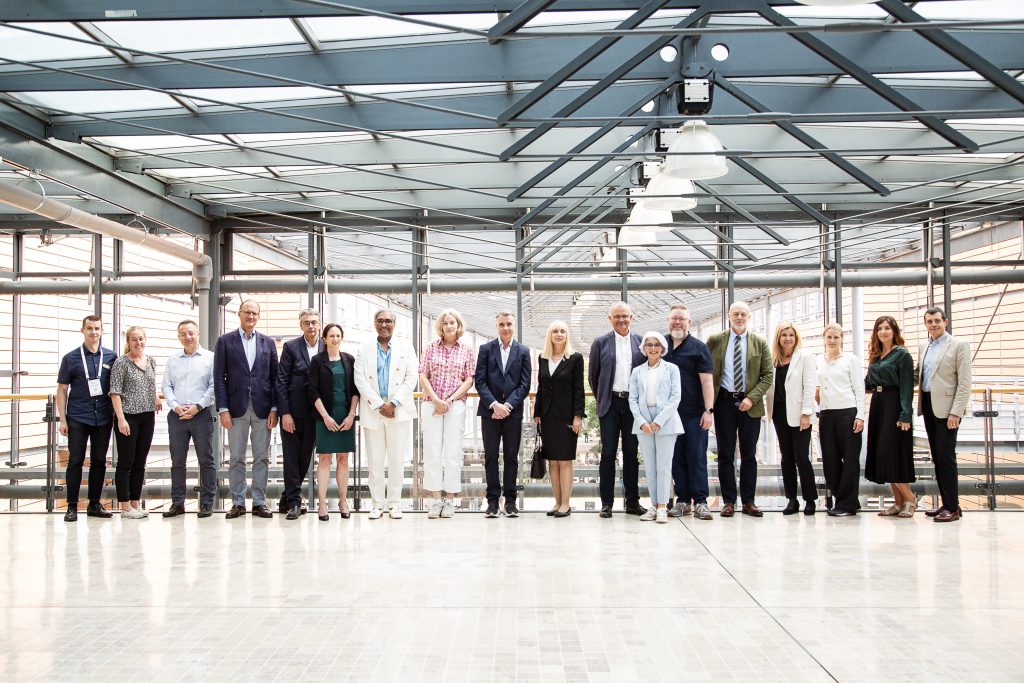
You always hope to leave things a little better than you found it. At the start of my tenure, I set out to have a professional office structure, identifying a new Officer Manager, Karolina Andersson and tasking her with the responsibility of identifying and empowering an office team that could support the work and ambition of our society. I tasked Prof. Alberto Zambon to lead outreach to new national societies around the world, Prof. Jeanine Roeters van Lennep to provide a digital face and an identity for our society on social media, Professors Phillipe Moulin and Stefano Romeo to reimagine our education platforms, their content and delivery and finally Prof. Marianne Benn our treasurer to provide a stable financial model. Each of them delivered even more than I could have imagined and provided a stable platform and working model for the incoming Executive Committee to build upon. None of us own the society and our job is to carry the baton without dropping it and pass on the baton with dignity knowing that we did our best for the values and mission of the society. As I near the end of my tenure, I will continue to watch with pride as the EAS flourishes, and always carry the memories of our journey together.
I encourage you to support our new President and the new Executive Committee just as much as you have supported me and my team. Thank you all once again for your trust, your dedication to the EAS, and your loyal support. Wishing you all seasonal greetings and every good wish for 2025.
Professor Kausik Ray FMedSci
President European Atherosclerosis Society
Professor of Public Health and Honorary Consultant Cardiologist Director of Imperial Centre for Cardiovascular Disease Prevention
Director of the Imperial Clinical Trials Unit-Global
Imperial College London